


Med Quality

Development of technical documentation

stylish businessman working in a office and use the phone scaled
When it comes to medical device certification, an essential part of the certification process is the technical documentation for the medical device, also known as the “technical file” for the medical device. Before starting the development of the technical file, it’s important to understand the current regulatory requirements for medical devices. In Ukraine, these include Technical Regulation No. 753 for medical devices, Technical Regulation No. 754 for in vitro medical devices, and Technical Regulation No. 755 for active implantable medical devices, as well as the standard DSTU ISO 13485:2018.

According to the Technical Regulations, the technical documentation is documentation regarding a medical device that includes:

  • a general description of the medical device, including any planned modifications of the device, as well as its intended use;
  • design drawings, information on the intended manufacturing methods of the medical device, as well as diagrams of components, assemblies, circuits, etc.;
  • descriptions and explanations necessary to understand the drawings, diagrams, and operation of the medical device;
  • risk analysis results, information about standards fully or partially applied from the list of standards that correspond to European harmonized standards, and voluntary application of which may be seen as evidence of conformity of medical devices with the requirements of the Technical Regulation on medical devices, as well as a description of decisions made to meet the requirements of the Technical Regulation on medical devices in case of partial application of the mentioned standards;
  • if the medical devices are marketed in a sterile state – a description of the methods used, as well as a validation report;
  • results of design calculations and verifications.
  • If the medical device is intended to be connected to other medical devices for its intended use, confirmation of its compliance with the requirements of the Technical Regulation on medical devices when connected to other medical devices;
  • results of preclinical evaluation;
  • results of clinical evaluation according to Appendix 10 to the Technical Regulation on medical devices;
  • labeling and instructions for use.
The standard DSTU EN ISO 13485:2018 provides a less extensive definition of the technical file, which should include the following documents:
  1. a general description of the medical device,
  2. its intended use/purpose, as well as labeling, including any instructions for use; product specifications;
  3. specifications or procedures for manufacturing, packaging, storage, handling, and distribution;
  4. procedures for measurement and monitoring;
  5. if necessary, installation requirements;
  6. if necessary, maintenance procedures.
young adult organizing documents scaled
crop people discussing drafts in office scaled
During the development of the technical file, a common question arises: “Where should we start?”. It is always best to begin with preclinical testing, clinical evaluation, and risk assessment, as these documents form the foundation of the technical file. Preclinical testing typically includes:
  • biocompatibility testing according to the ISO 10993 series of standards
  • electromagnetic compatibility and safety testing according to IEC 60601 and IEC 62353 standards
  • shelf-life testing to determine the “use by” date
and other tests depending on the type of medical device.

To avoid conducting clinical trials in Ukraine, you can perform a clinical evaluation of the medical device. This involves a literature search for scientific information and results from clinical studies that confirm the effectiveness of an equivalent device, i.e., a device with identical composition/function, etc. The main challenge in conducting a clinical evaluation is finding an equivalent device already on the market with a sufficient number of clinical study results available in the public domain. An additional problem is the paid access to bibliometric databases where full-text articles are published.

Risk assessment associated with the use of a medical device is an integral part of the technical documentation for the device. It should be reviewed regularly to identify potential risks after the product has been released to the market. Risk assessment is conducted according to the ISO 14971 standard to identify all possible risks and develop measures to mitigate them.

News

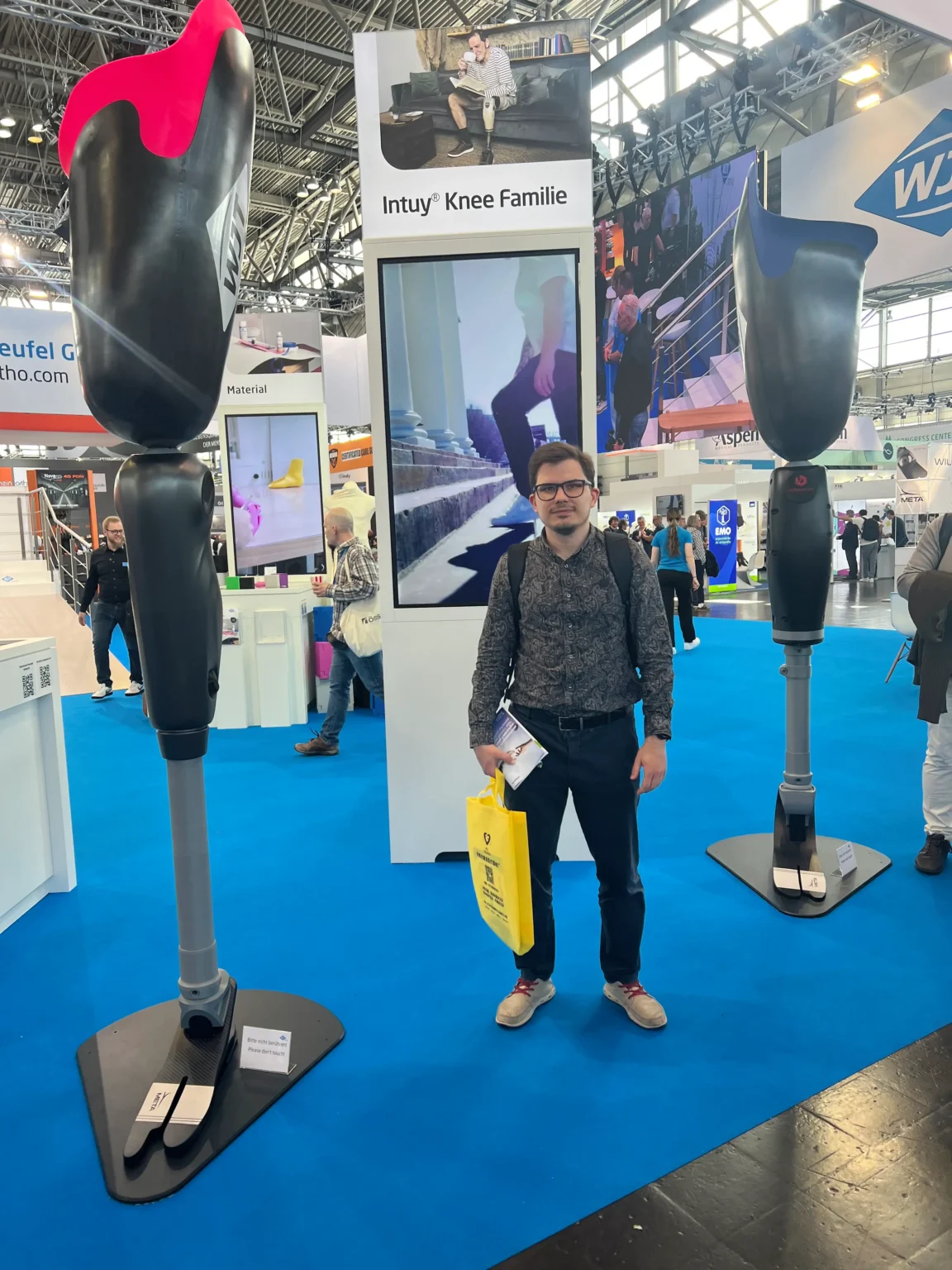
Med Quality at OTWorld 2026: What Foreign Manufacturers Asked Us About Entering Ukraine

Med Quality at OTWorld 2026: What Foreign Manufacturers Asked Us About Entering Ukraine

This year we attended OTWorld in Leipzig, the world’s leading trade show for prosthetics, orthotics and…

The Director of Med Quality conducted a training on the requirements of ISO 13485:2016 on April 2, 2025.

The Director of Med Quality conducted a training on the requirements of ISO 13485:2016 on April 2, 2025.

On April 2, 2025, the Director of Med Quality conducted a training for the staff of…
Med Quality's CEO Vladyslav Kasyanenko hosted webinar on the topic "Conformity assessment of medical devices in Ukraine"

Med Quality's CEO Vladyslav Kasyanenko hosted webinar on the topic "Conformity assessment of medical devices in Ukraine"

Speaker covered the following topics: Overview of Ukrainian Technical Regulation No 753 on medical devices: Introduction,…

Jak możemy pomóc?

How can we help?

Як можемо допомогти?